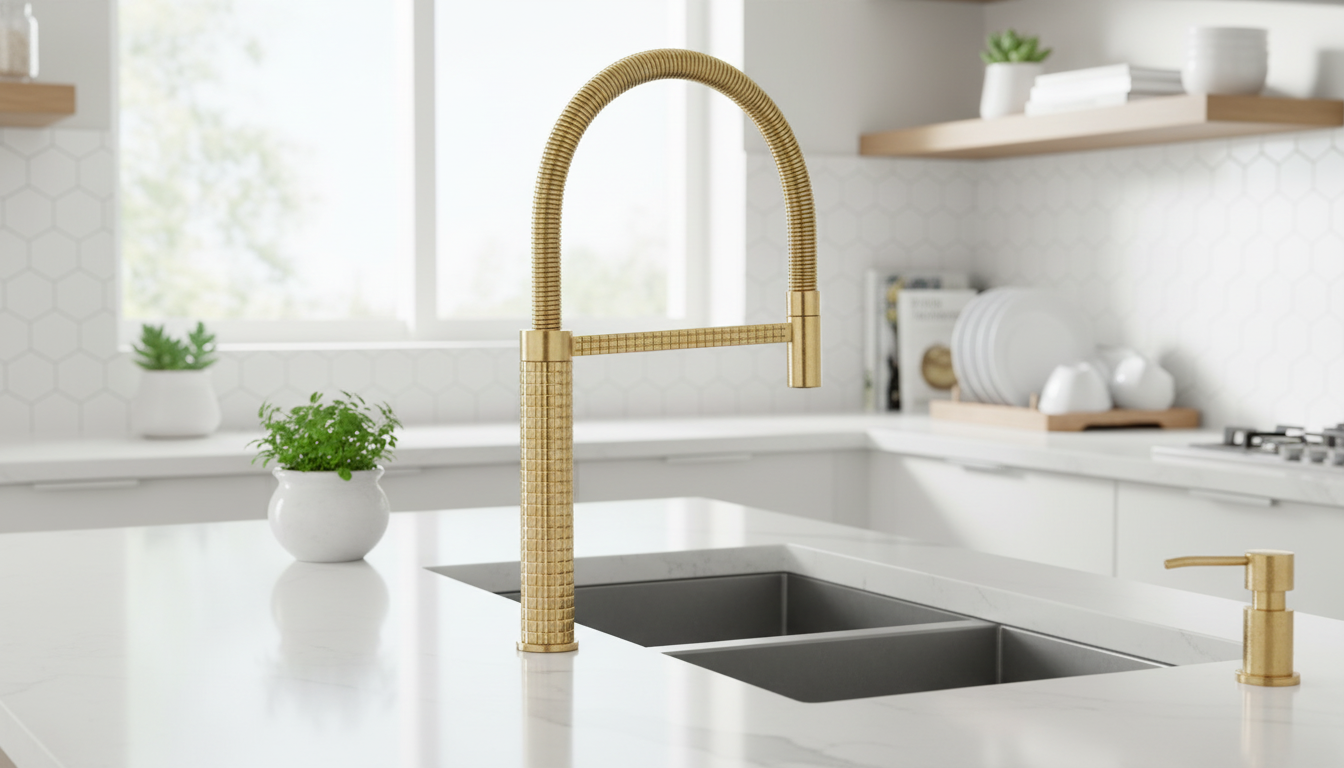
Brass kitchen faucets are trending toward warmer, more tailored looks that feel intentional rather than flashy. Today’s most popular designs balance a “made-to-last” metal presence with cleaner silhouettes, smarter functionality, and finishes that coordinate with mixed materials like wood, stone, and stainless.
Homeowners are moving beyond high-shine yellow brass and gravitating to brushed brass, satin brass, and “champagne” tones. These finishes mute fingerprints, look more natural in daylight, and pair easily with both light and dark cabinetry.
Unlacquered brass (or living finishes) is gaining popularity for its evolving patina. Instead of staying perfectly uniform, the surface deepens and darkens over time, creating a one-of-a-kind look that feels authentic in traditional, European, and modern organic kitchens.
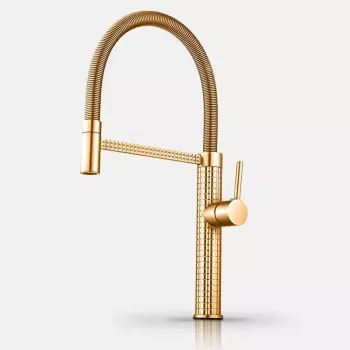
Designs are getting slimmer and cleaner: arched goosenecks, crisp right-angle spouts, and streamlined pull-down heads. Small details—like knurled handles, subtle inlays, or gently faceted levers—add texture without looking ornate.
Commercial-style features are being integrated more discreetly: flexible pull-down sprayers, magnetic docking, dual-spray modes, and higher-arc spouts for filling tall pots. The trend is performance without the bulky “restaurant faucet” look.
Brass faucets are increasingly styled alongside stainless appliances and black or bronze cabinet hardware. The goal is contrast with cohesion—matching undertones (warm with warm, cool with cool) so the room feels layered, not mismatched.
For more examples and finish comparisons, visit the main guide to the latest brass kitchen faucet design trends.
For Latest Brass Kitchen Faucet Design Trends for 2026, the best answer depends on fit, material, care instructions, and how the product will be used day to day.
Most brass faucets do well with gentle soap and water and a soft cloth. Avoid abrasive cleaners; if you choose unlacquered brass, expect natural patina and spot-clean only when needed.


Leave a comment