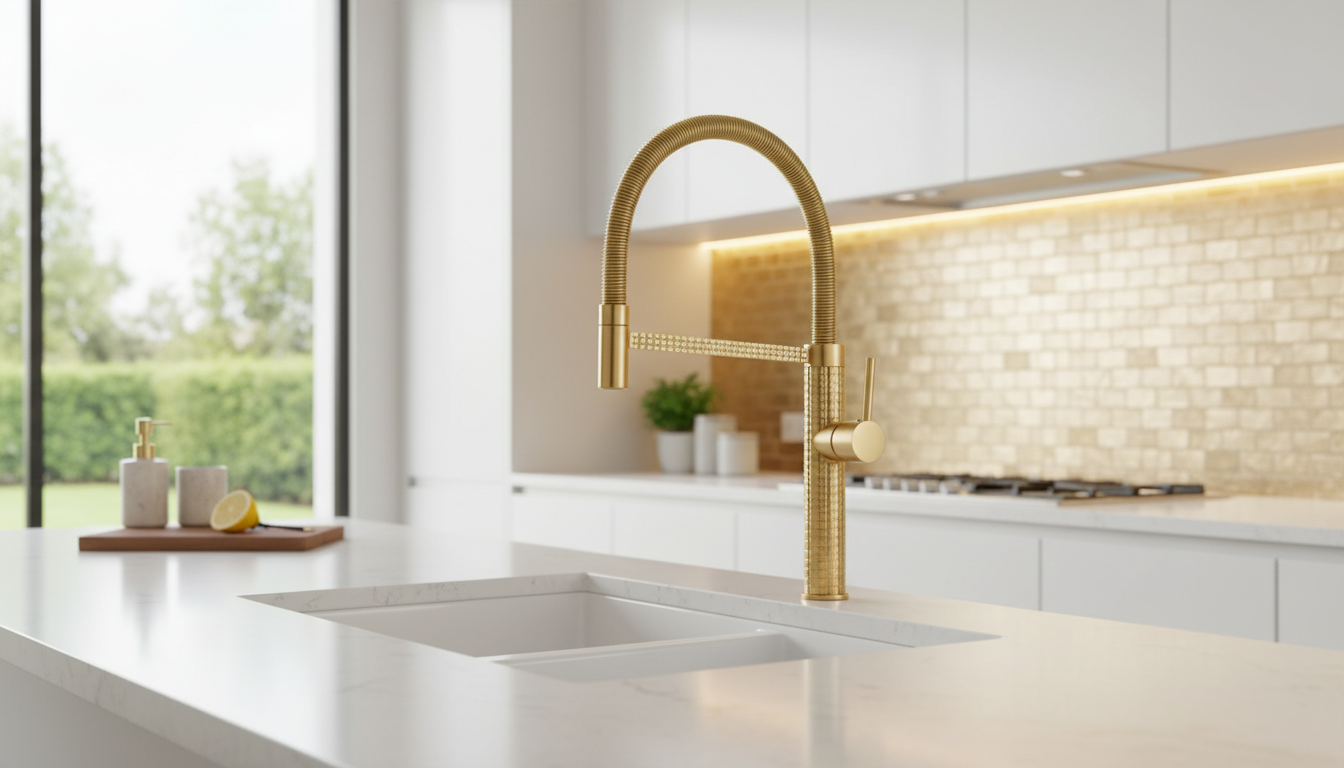
The best brass kitchen faucets combine solid-brass construction, a durable finish, smooth valve operation, and a design that fits how the sink is used every day. Brass is valued because it’s naturally corrosion-resistant and substantial, helping a faucet feel stable, operate quietly, and hold up to frequent temperature changes.
Look first at the body material. A true solid-brass faucet body tends to outperform “brass-colored” faucets made from mixed metals. Next, focus on the finish: PVD or similarly hardened coatings generally resist spotting and wear better than softer plating, especially in brushed or satin brass looks. Finally, confirm the faucet uses a quality ceramic disc cartridge, which is a strong indicator of reliable leak resistance over time.
Spray performance: A pull-down sprayer with a strong magnetic dock, multiple spray modes, and an easy-clean nozzle makes daily rinsing faster and reduces drips from poor retraction.
Arc and reach: High-arc spouts provide pot clearance; longer reach helps center water flow over deep or wide sinks. Match these to your sink size and cabinet clearance.
Mounting compatibility: Check hole count (single-hole vs. 3-hole), deck thickness limits, and whether an escutcheon plate is included if needed.
Lead-free compliance: Choose faucets labeled lead-free and compliant with current U.S. plumbing standards for kitchen use.
Polished brass delivers a classic, bright look but shows fingerprints more easily. Brushed or satin brass hides smudges better and pairs well with modern cabinetry. If the kitchen sees heavy use, prioritize finishes described as “spot-resistant,” “fingerprint-resistant,” or PVD-treated to reduce maintenance.
For a deeper breakdown of top options, finish types, and what to check before buying, see the full guide here: What are the best brass kitchen faucets?
Clean it with mild soap and water, then dry with a soft cloth to prevent water spots. Avoid abrasive pads and harsh chemical cleaners that can dull or damage the finish.






Leave a comment