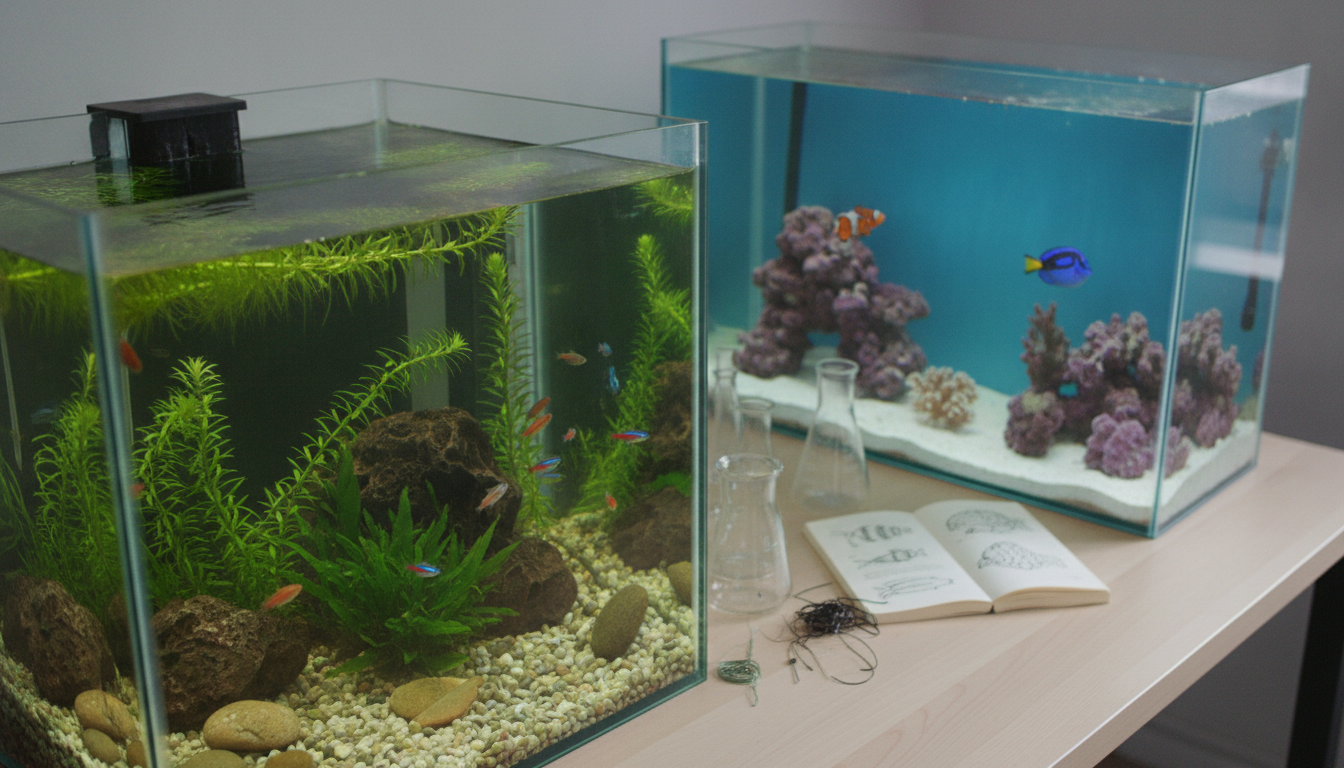
In almost all home aquariums, you should not mix saltwater fish with freshwater fish. These fish are adapted to very different water chemistry, and the mismatch isn’t a minor comfort issue—it affects their ability to regulate fluids and salts in their bodies. The result is severe stress, rapid decline, and often death even if the fish looks “okay” at first.
Freshwater fish are built to live in water with very little dissolved salt, so their bodies constantly work to keep salts in and excess water out. Saltwater fish face the opposite challenge: they’re surrounded by salty water, so they work to keep water in and excess salts out. When placed in the wrong environment, their osmoregulation can fail, which can lead to lethargy, loss of appetite, breathing issues, and organ failure.
Brackish water is a middle-ground salinity used for specific species that naturally live in estuaries (where rivers meet the sea). A brackish tank can be successful, but it still doesn’t mean you can combine random freshwater and marine fish. Brackish-compatible species need matching salinity targets, stable parameters, and carefully chosen tankmates.
If you want a diverse community, build it around one water type: a freshwater community tank (hardness and pH matched to the fish) or a marine tank (reef-safe planning if corals are involved). If you’re curious about edge cases and special situations, see the detailed guide here: https://monumena.com/can-you-mix-saltwater-fish-with-freshwater-fish/.
For Mixing Saltwater and Freshwater Fish: Why It Fails, the best answer depends on fit, material, care instructions, and how the product will be used day to day.
Sometimes, but only if the species tolerates the same low-end salinity long-term. Many true brackish species will become stressed or sick if kept fully freshwater, so compatibility depends on the exact fish and the target salinity.







Leave a comment